

Tech Explained|The Core of a Solar Tracker Lies Where You Can't See
 Publish Time:2026-04-28
 Sources:
The direct value of a PV tracking system lies in increasing power plant generation yield. Whether a tracking system is truly reliable and safe often depends on technical details hidden beneath the surface—from drive system selection, to signal transmission pathways, to the coordination between controller and gearbox.
.jpg)
How Does It Stay Stable in Strong Winds?——The Value of Multi-Point Drive
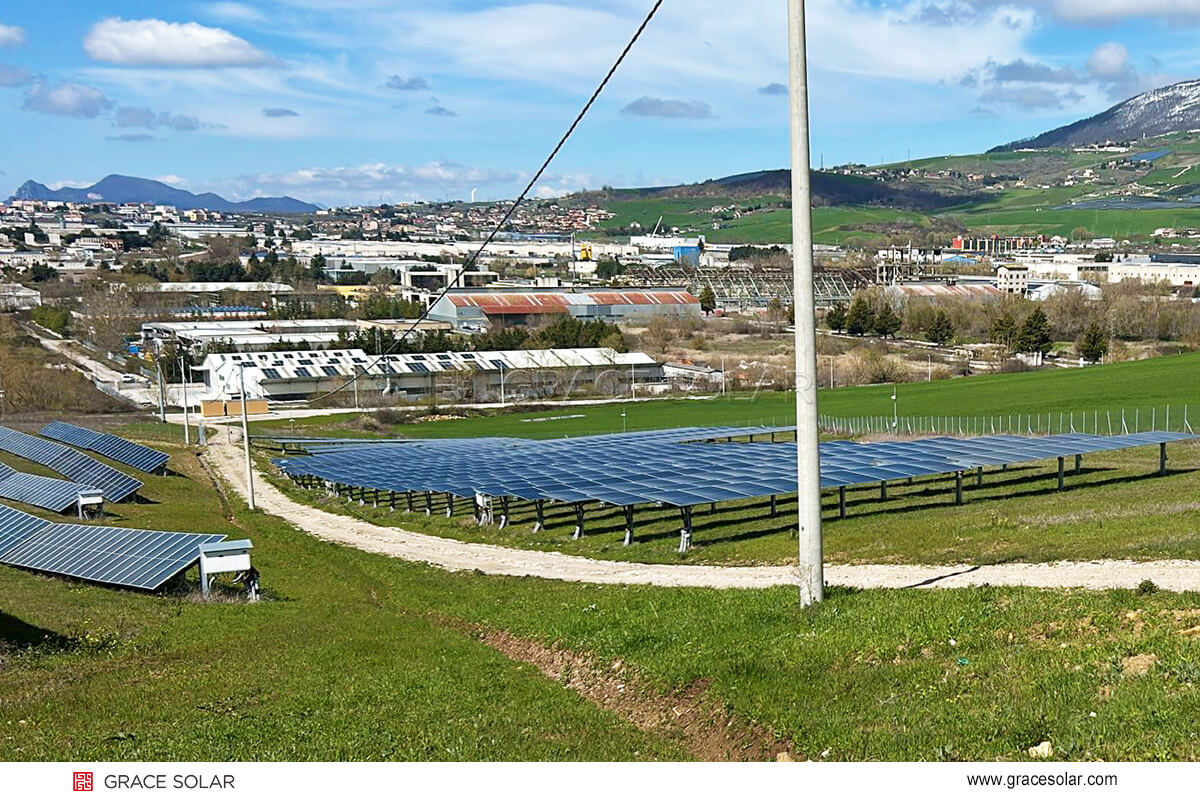
In regions with complex wind patterns, tracker stability is severely tested.. Under traditional single-point drive, long tracker arrays are prone to torsional instability during strong winds—analogous to a single person pushing a longboard cart, where crosswinds easily cause the vehicle to sway. Multi-point drive technology applies synchronized driving force at multiple positions along the tracker length, creating more uniform load distribution and significantly enhancing overall wind resistance. Therefore, in coastal typhoon zones or inland areas with frequent strong winds, multi-point drive has become a reliable technical solution for improving 1P tracker stability.
How Is Wind Speed Data Transmitted?——The Relay Role of the Communication Box
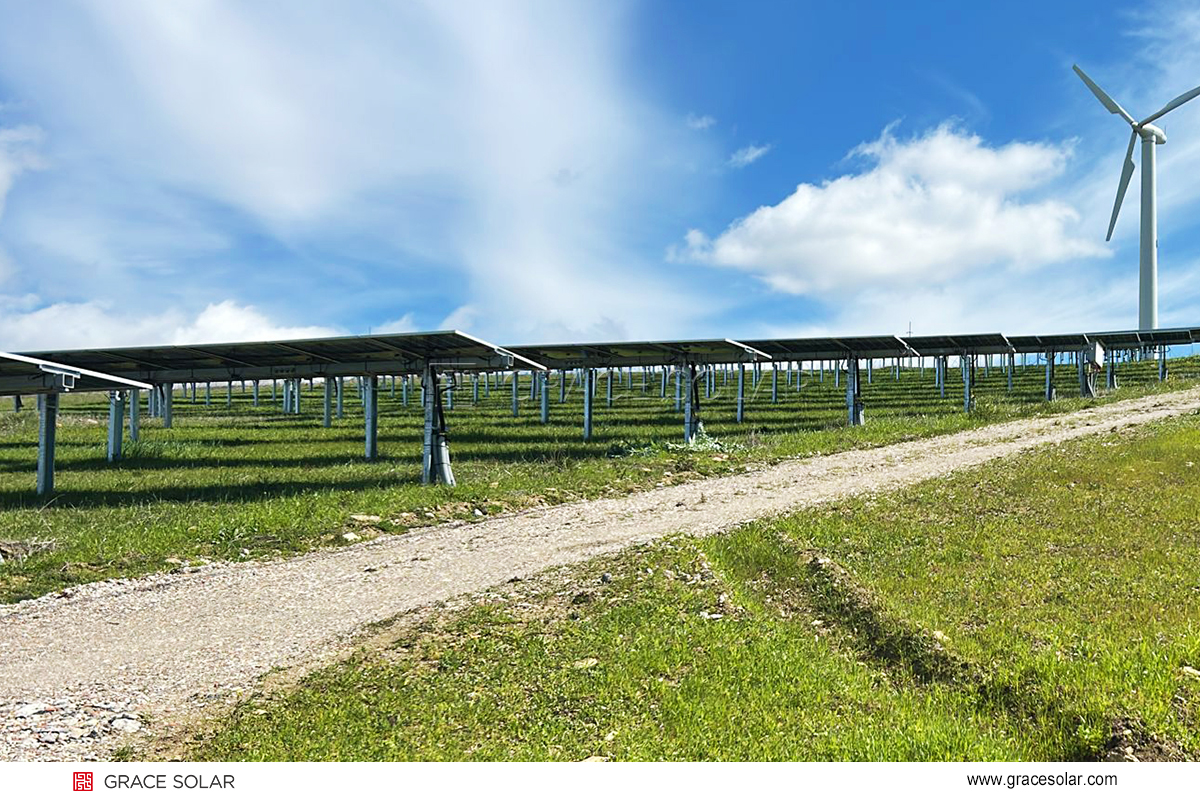
The anemometer collects real-time wind speed data on-site, but its signal cannot be transmitted directly to the control cabinet. Instead, it must go through a communication box for data integration and forwarding. As a signal relay node, the communication box converts the data protocol of the anemometer's readings before transmitting it to the control cabinet. In this process, the hardware reliability of the communication box itself is critical—only a communication box with high protection rating and strong anti-interference capability can ensure long-term stable wind data transmission. Clearly, the communication box is an indispensable link in the wind information transmission chain.
Who Commands the Rotation?——The Algorithm as the "Brain"
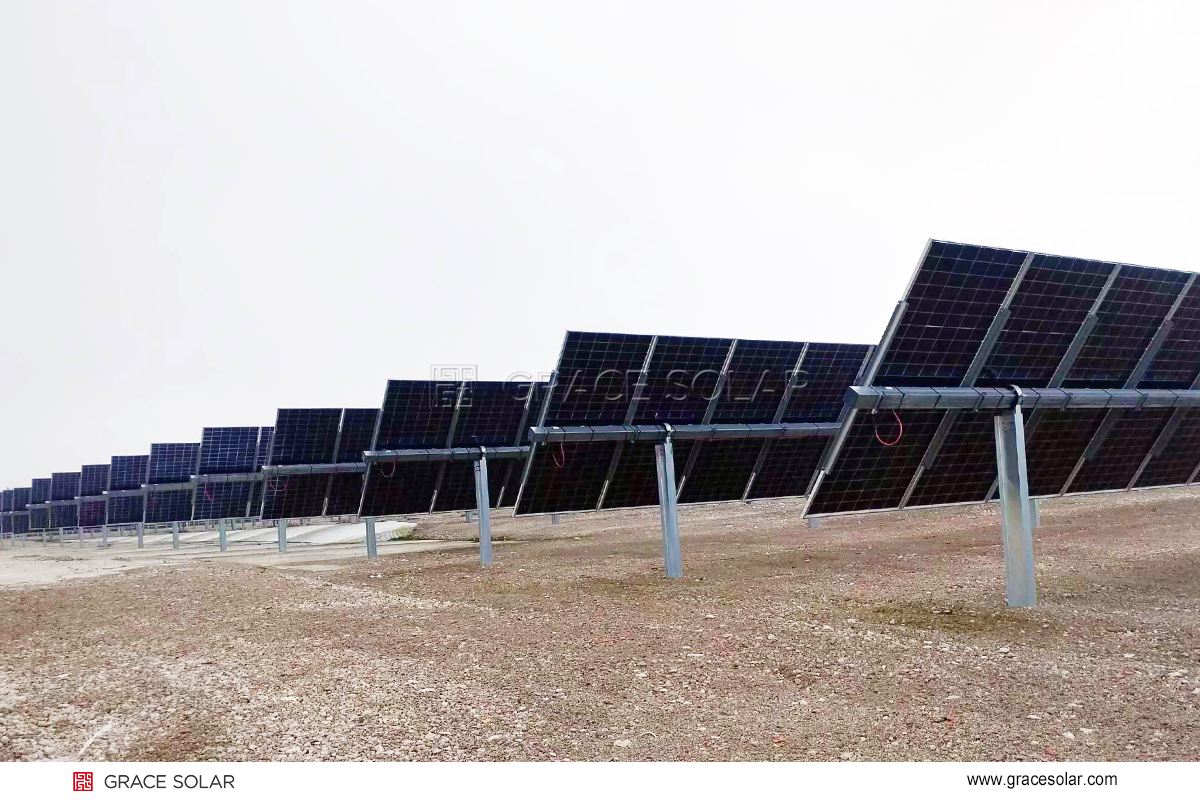
After receiving wind speed information, how does the control cabinet command the tracker to rotate? This involves the core logic governing gearbox operation. At the hardware level, the control cabinet is the component that sends rotation commands directly to the gearbox. However, as a hardware carrier, the control cabinet itself does not determine the system's intelligence level—the true key lies in its internal control algorithm. The algorithm determines when to rotate, how fast to rotate, and under what conditions to stow flat. It can be said that the control cabinet is the "executor," while the algorithm is the true "commander."
Grace Solar's Answer——From Technology to Product Implementation
A tracking system is much more than just a structural assembly. Particularly in harsh environments such as high-wind zones or complex terrain, systematic coordination across multiple dimensions—drive solutions, signal transmission, and electrical control—is essential. Grace Solar has accumulated extensive practical experience in the R&D and manufacturing of tracking systems. Guided by real-world application scenarios, we integrate key technologies into our product system. From material selection to process implementation, from corrosion protection level control to intelligent tracking system upgrades, we are committed to ensuring that every set of mounting structures withstands the test of time.
Spotlight News
-
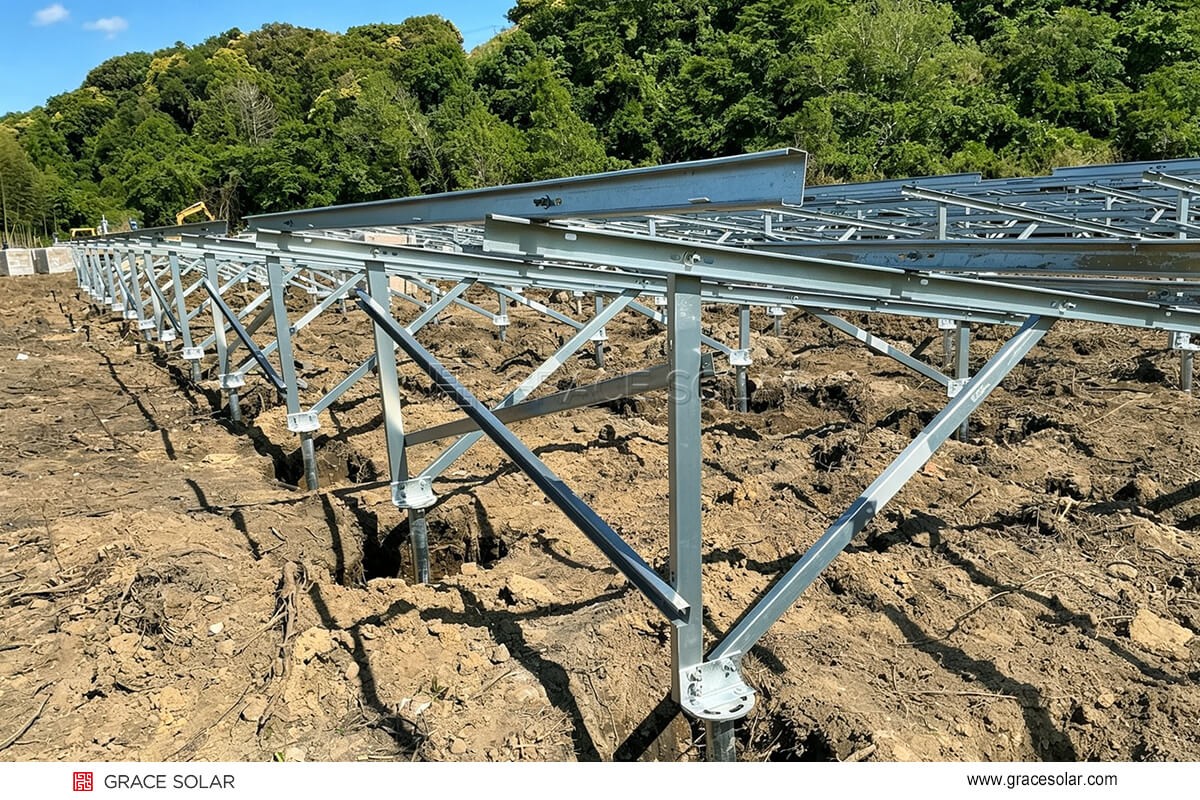
Project Spotlight|Grace Solar Carbon Steel Mounting System Powers Low-Carbon Development in Chiba, Japan
2026-09-15 -
Global View|Middle East Market Expands Further, PV Mounting Systems Enter a New Window
2026-09-02 -
Tech Explained | The Survival Code of PV Mounting Systems: Strategies Against Extreme Climate
2026-08-26