
Distributed photovoltaic and sewage treatment plant project design
 Publish Time:2021-12-10
 Sources:garcesolar
As photovoltaics gradually enter the era of parity, the economic benefits of distributed photovoltaics have become more prominent, and the corresponding application scenarios have become more diversified. Various "photovoltaic" technologies such as fishing and light complementation, agriculture and light complementation, BIPV, and sewage treatment have ushered in a broader space for development. At the same time, the distributed photovoltaic system with complex scenes also puts forward higher requirements for project design. On the one hand, we must ensure the safety and reliability of the project, on the other hand we must also consider the investment cost and rate of return of the entire project.
Selection and design innovation of distributed photovoltaic equipment
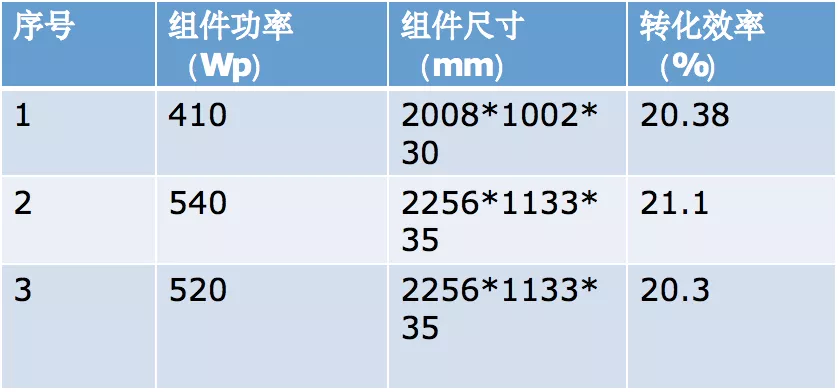
In terms of basic equipment selection, on the one hand, large-size components do not necessarily mean higher conversion efficiency, and it is also necessary to comprehensively consider the cost per watt and conversion efficiency when selecting equipment. On the other hand, although large-scale modules bring cost savings to ground-based power stations, due to the limited area, it is sometimes difficult to place large modules on the edge of the distributed roof, thereby reducing the overall layout capacity. In addition, with the reduction of the cost of bifacial modules, from the perspective of electricity costs, bifacial modules are more suitable for distributed power plants. In terms of inverters, the ground application of the 1500V system is relatively mature, and its cost reduction capability is excellent. According to the specific situation of the distributed project and the complexity of the roof environment, it can be taught in accordance with their aptitude and used rationally. In terms of cable selection, it is feasible to replace copper cables with aluminum cables. On the one hand, it can reduce the weight of the cable, reduce the abrasion of equipment and cables, and make installation easier. On the other hand, the cost of aluminum cables is about 2/3 of that of copper cables, which can reduce installation costs. "
In fact, the equipment selection of photovoltaic enterprises is already very familiar. The real difficulty is that in the diverse applications of distributed scenarios, design difficulties are increasing the resistance of the project. Due to load, environment, site constraints, and other reasons on the roof or building, some planning projects had to be abandoned. For example, some roofs have low load and do not meet the installation conditions.
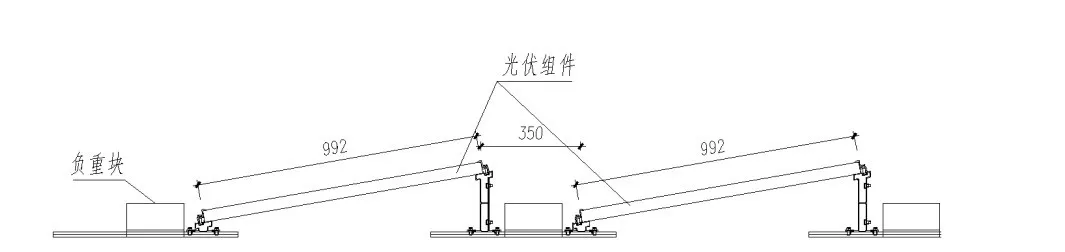
The total self-weight load of the light guide plate light support load-bearing block and photovoltaic modules is controlled at about 20kg/m2. The bracket can meet the wind resistance requirements and the load requirements of the original roof.
Design Points of Distributed Photovoltaic Wastewater Treatment Plant
In recent years, the "Sewage Treatment Plant Photovoltaic" project has been regarded as a major application scenario for distributed photovoltaics. In a document issued by the State Council in April this year, it also clearly put forward the guidelines to encourage sewage treatment companies to comprehensively use the site space and adopt the "surplus for self-use" model to construct photovoltaic power generation projects. However, due to the large number of obstacles in the length, underground pipelines and height of the sewage treatment plant pool, the "Sewage Treatment Plant Photovoltaic" project failed to land on a large scale.
"In fact, in general sewage treatment plants, the tank diameter is about 40-50 meters. There are many densely packed sewage, sludge, water supply and drainage, and cable pipes. The actual pipe location may deviate from the drawing. The sludge pump room is about 10m above the ground. Many well-known universities have proposed pole schemes to solve the problem of large-span photovoltaic support."
No matter how good the design is, a specific project is needed to achieve it. In response to the development concept of distributed photovoltaic projects in sewage treatment plants, "Sewage treatment plants are generally state-owned enterprises. We can introduce wind, solar, and storage to become a green zero-emission enterprise. They still attach great importance to these aspects. Photovoltaic power plants combine deodorant cover design to save Investment to prevent green algae and reduce waste into the pool. At the same time, it also brings supplementary power supply to enterprises, which improves the reliability of power supply, and more importantly, whether it is rent or electricity tariffs, it can bring increments to enterprises. In addition, It must be emphasized to the enterprise that the power station is responsible for the operation and maintenance of the power station, so as to eliminate the worries of the enterprise."