

Project Spotlight|Grace Solar Carbon Steel Mounting System Powers Low-Carbon Development in Chiba, Japan
 Publish Time:2026-09-15
 Sources:Grace Solar
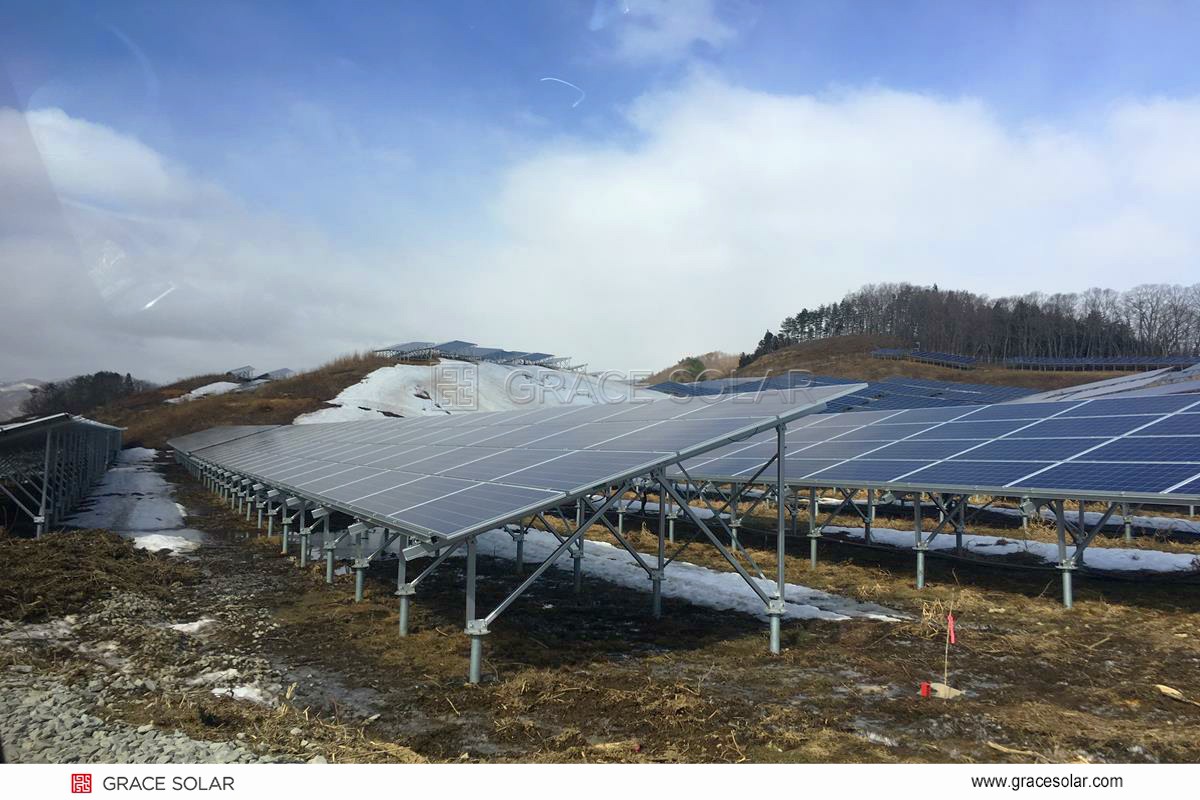
Grace Solar has recently completed the delivery and acceptance of a photovoltaic mounting project in Chiba Prefecture, Japan's Kanto region. Once operational, the project is expected to generate approximately 1.4 million kWh of electricity annually—equivalent to saving nearly 560 tonnes of standard coal and reducing CO? emissions by over 1,400 tonnes per year. This clean power will be fed into the local grid, continuously supplying green energy to Chiba Prefecture, with an annual carbon offset comparable to planting about 77,000 trees—providing lasting momentum for Chiba's low-carbon energy transition.
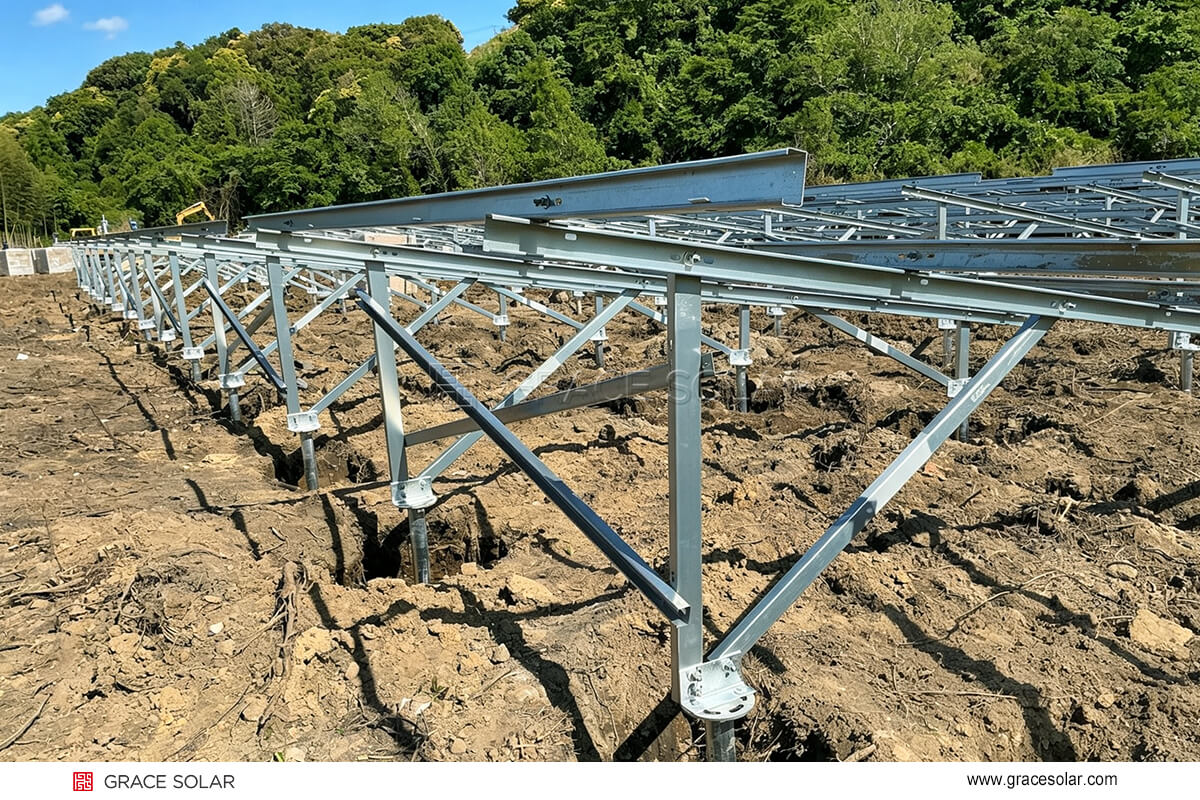
Corrosion Protection: From Surface to Detail
Situated along the coast, Chiba is exposed year-round to moist Pacific air, with high salt-spray conditions in coastal areas posing severe challenges to the corrosion resistance and structural integrity of PV mounting systems. Grace Solar's technical team conducted an in-depth analysis of local climate characteristics and geological conditions, implementing comprehensive enhanced anti-corrosion treatments throughout the mounting structure. This effectively withstands long-term erosion in the coastal high-corrosion environment, safeguarding the power plant's safe operation throughout its lifecycle. From material selection and structural design to construction adaptation, a highly reliable carbon steel mounting solution was custom-engineered—establishing a safe and stable power generation support system within this complex coastal environment.
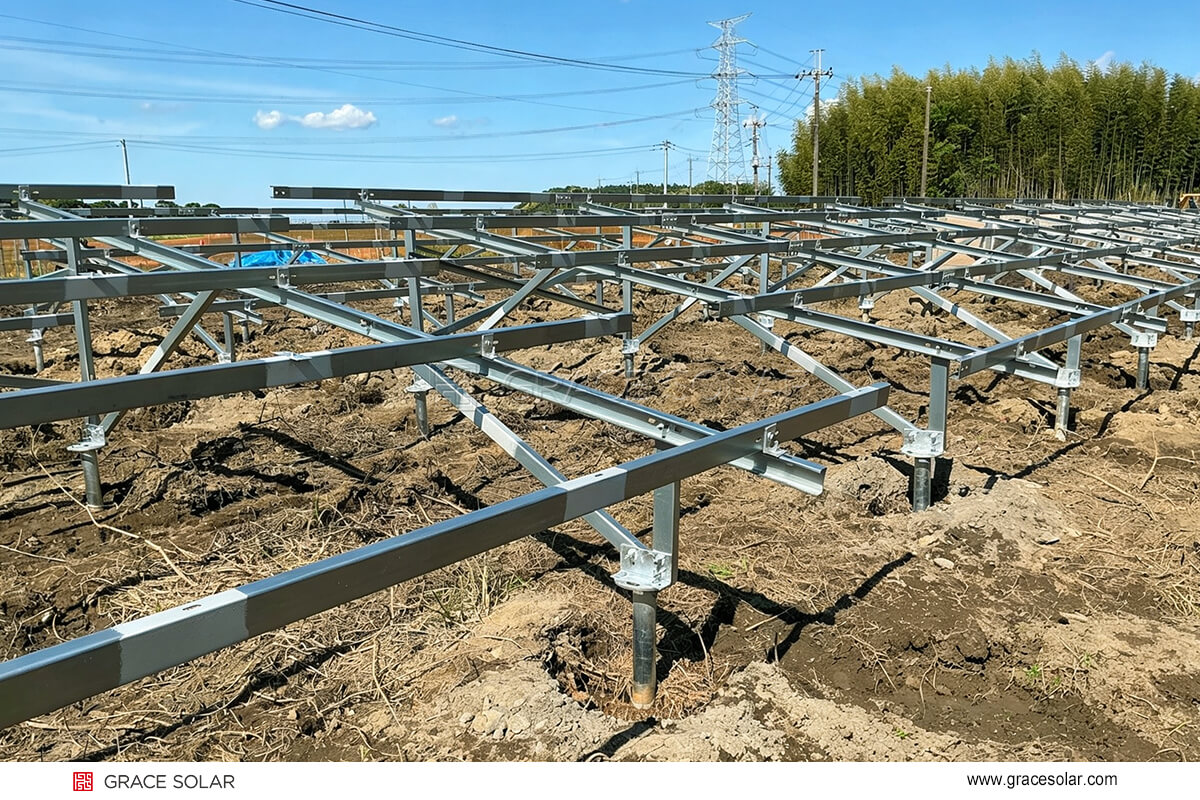
Wind Resistance: Data-Driven Design
"We prioritize structural safety, driving design with data and ensuring quality through attention to detail," noted the Grace Solar project manager. Given the region's frequent typhoons, the team conducted multi-condition wind load simulations, optimizing the support framework and connection node configurations to ensure structural stability of the mounting system even under extreme weather events.
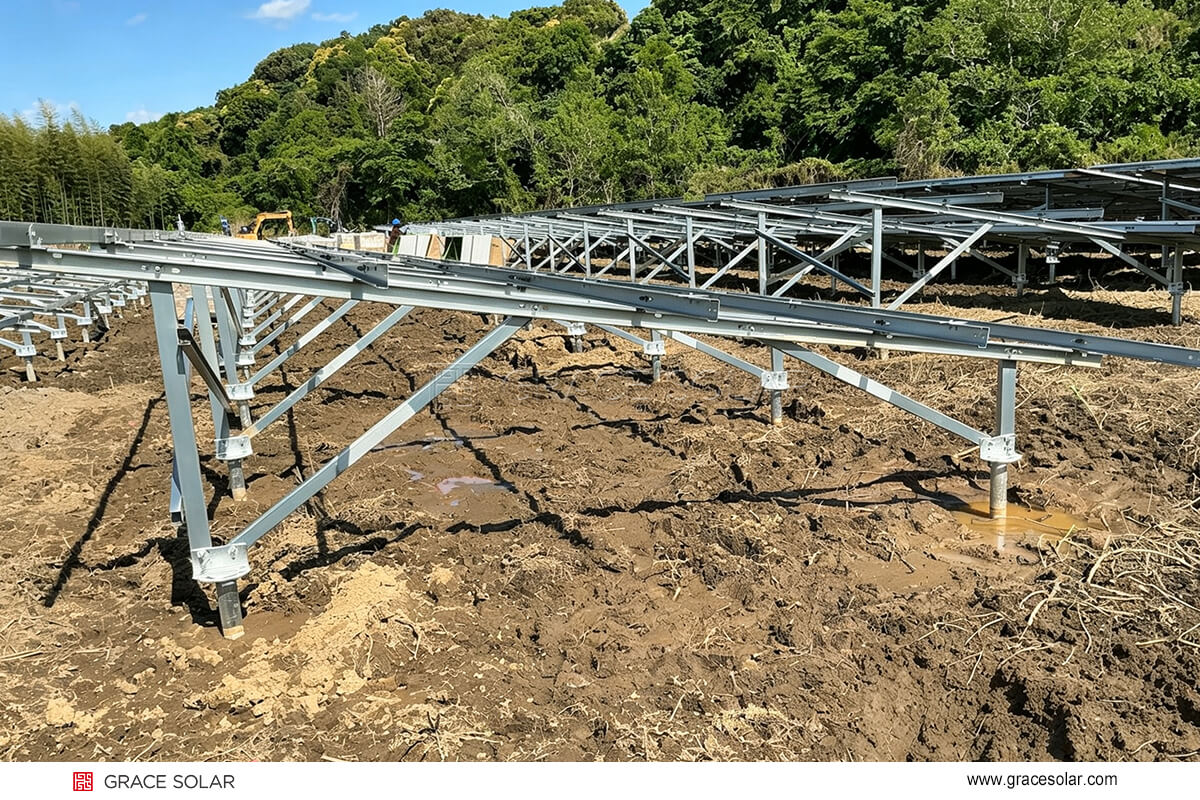
Ground Integration: Coexisting with Geological Conditions
Addressing the practical challenges of low bearing capacity and high groundwater levels in parts of Chiba, Grace Solar adopted precast pile foundations combined with a lightweight layout approach—minimizing deep excavation and backfill work. This not only reduced construction disturbances to weak soils but also enhanced installation efficiency and precision, achieving a balanced integration of engineering safety and project schedule.
From scheme validation to grid connection, Grace Solar translated climate risks into design inputs and turned on-site constraints into optimization opportunities. The project has not only validated the reliability of carbon steel mounting systems under marine climate conditions but also accumulated systematic solutions tailored for coastal plain scenarios—providing a replicable and referable model for future PV project development in Japan's coastal regions.
Spotlight News
-
Project Spotlight|Grace Solar Carbon Steel Mounting System Powers Low-Carbon Development in Chiba, Japan
2026-09-15 -
Global View|Middle East Market Expands Further, PV Mounting Systems Enter a New Window
2026-09-02 -
Tech Explained | The Survival Code of PV Mounting Systems: Strategies Against Extreme Climate
2026-08-26