

Tech Explained|How to Strategically Arrange PV Modules ?
 Publish Time:2025-12-01
 Sources:
The arrangement of solar modules on mounting structures directly determines plant's power generation efficiency, land utilization, and long-term stability.
Module Orientation
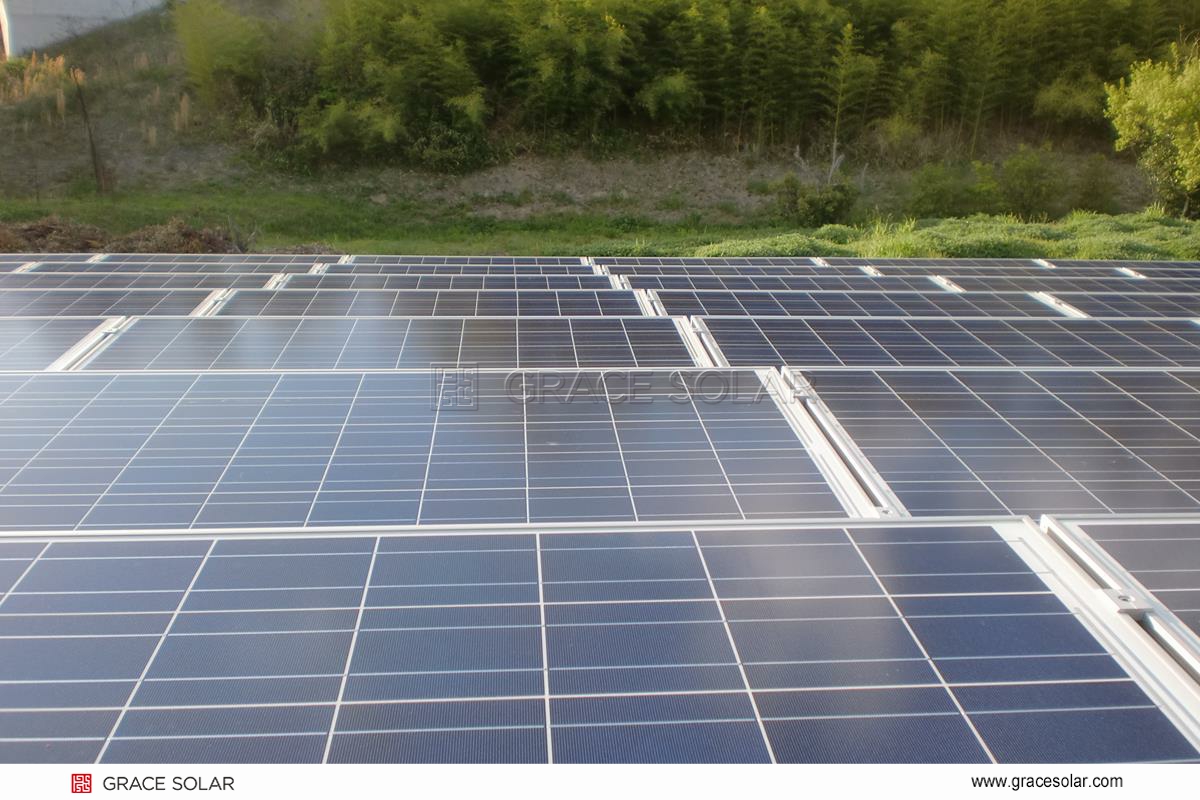
Module orientation is a essential feature of PV system design, primarily divided into landscape and portrait layouts. Landscape layout, where the module's long side is perpendicular to the north-south direction, offers a compact structure and is particularly suitable for tracking systems, helping reduce overall costs. Portrait layout, with the long side parallel to the north-south direction, adapts better to narrow terrains. In practice, the choice depends on site shape, structure type, and investment cost.
Rows & Columns
Array planning need to balance between light and space. The number of rows (north-south direction) must account for geographic location, solar altitude, and inter-row shading. For example, in most regions of China, landscape arrays often adopt 4-row configurations, empirically balancing sunlight exposure and land cost. The number of columns (east-west direction) defines the array width, ensuring minimal shading on the shortest winter day while maximizing module capacity within limited land.
Tilt & Height
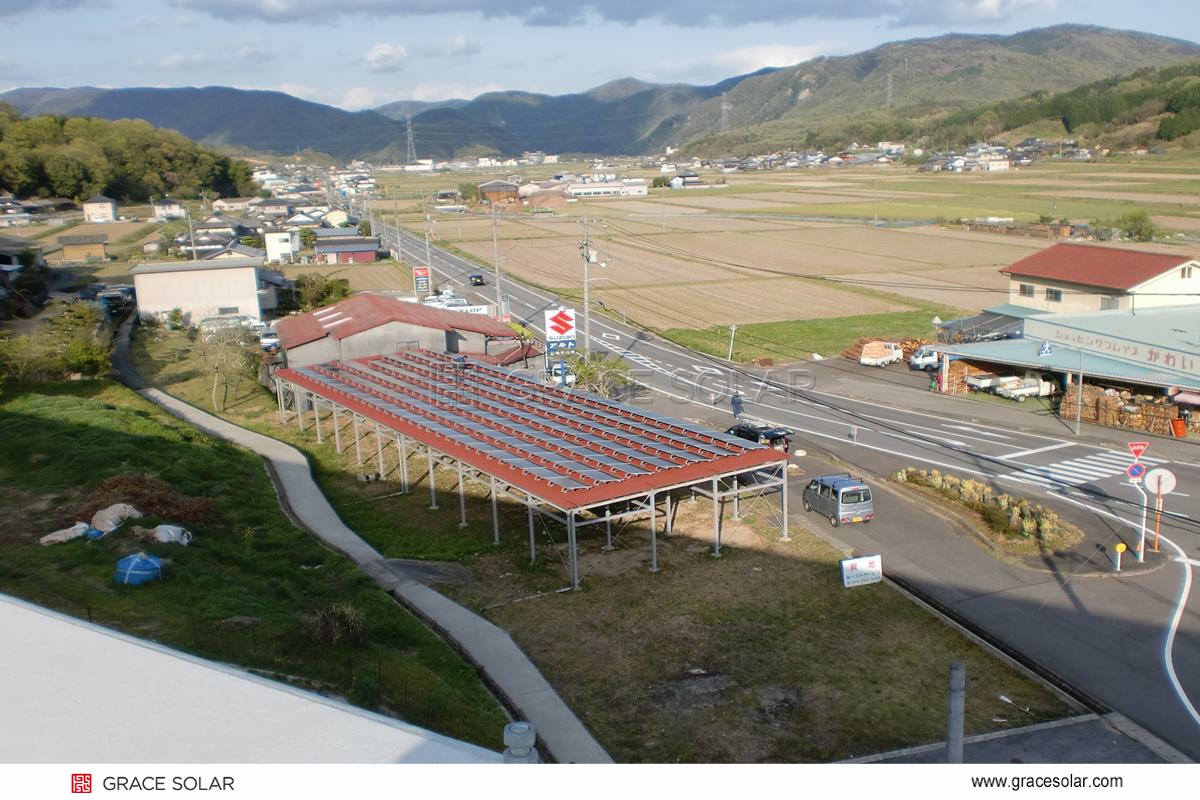
Module tilt and ground clearance are critical to system performance and operational stability. The tilt angle aims not for aesthetics but for maximizing solar radiation capture. Beyond standard design, flexibility is key: in space-constrained cases, a smaller tilt can enhance land use efficiency. Ground clearance reflects engineering wisdom—addressing flood risk, improving airflow for cooling, and allowing snow shedding. This design balances safety, generation, and ecology.
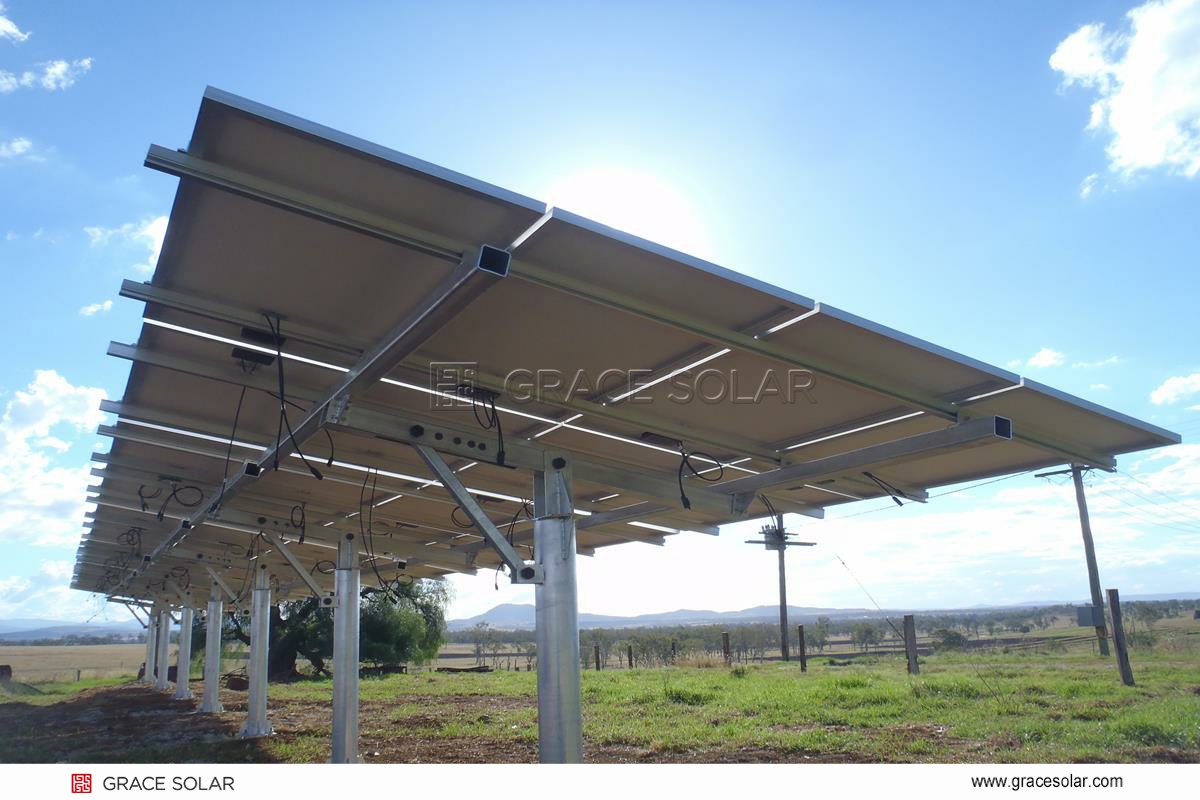
The arrangement of PV structures forms the plant's "power lifeline", supporting every kilowatt-hour generated. It is not just orderly placement but a series of engineering poems written in sunlight by Grace Solar.
Spotlight News
-
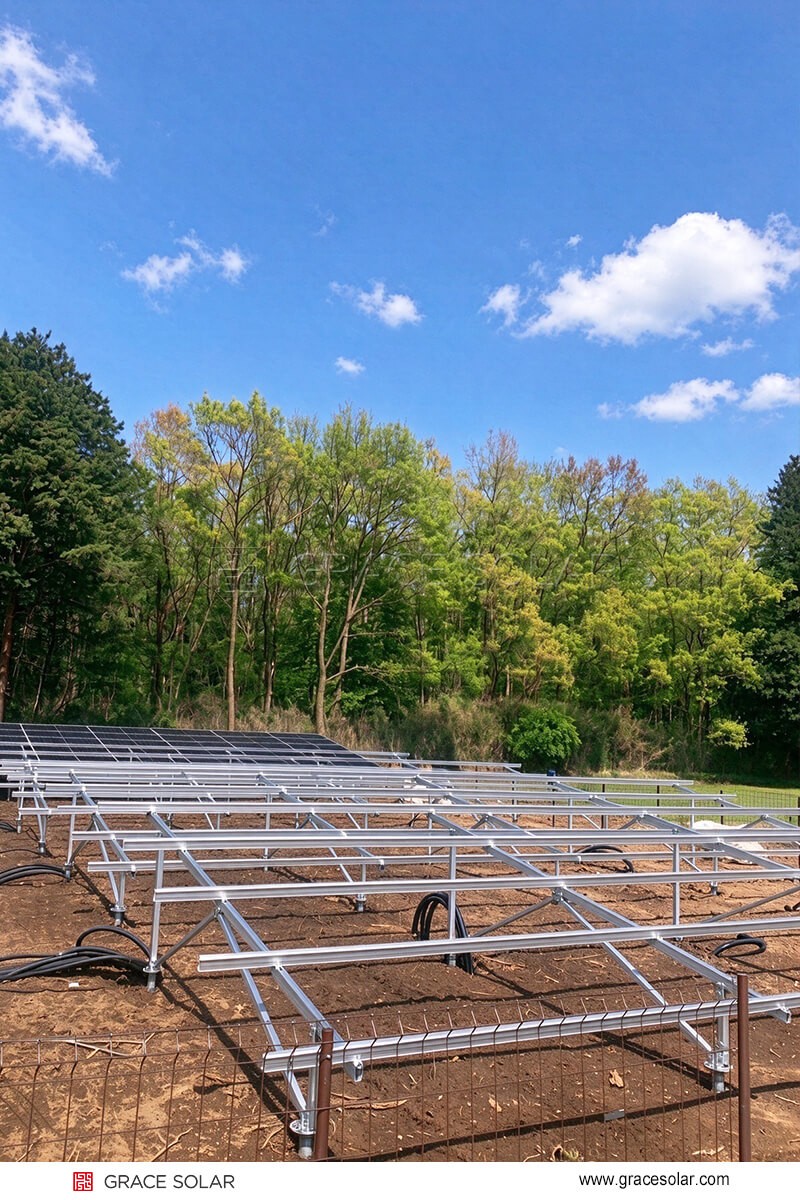
Project Spotlight | Japan PV Practice: Grace Solar Supports Ibaraki's Green Upgrade
2026-10-19 -
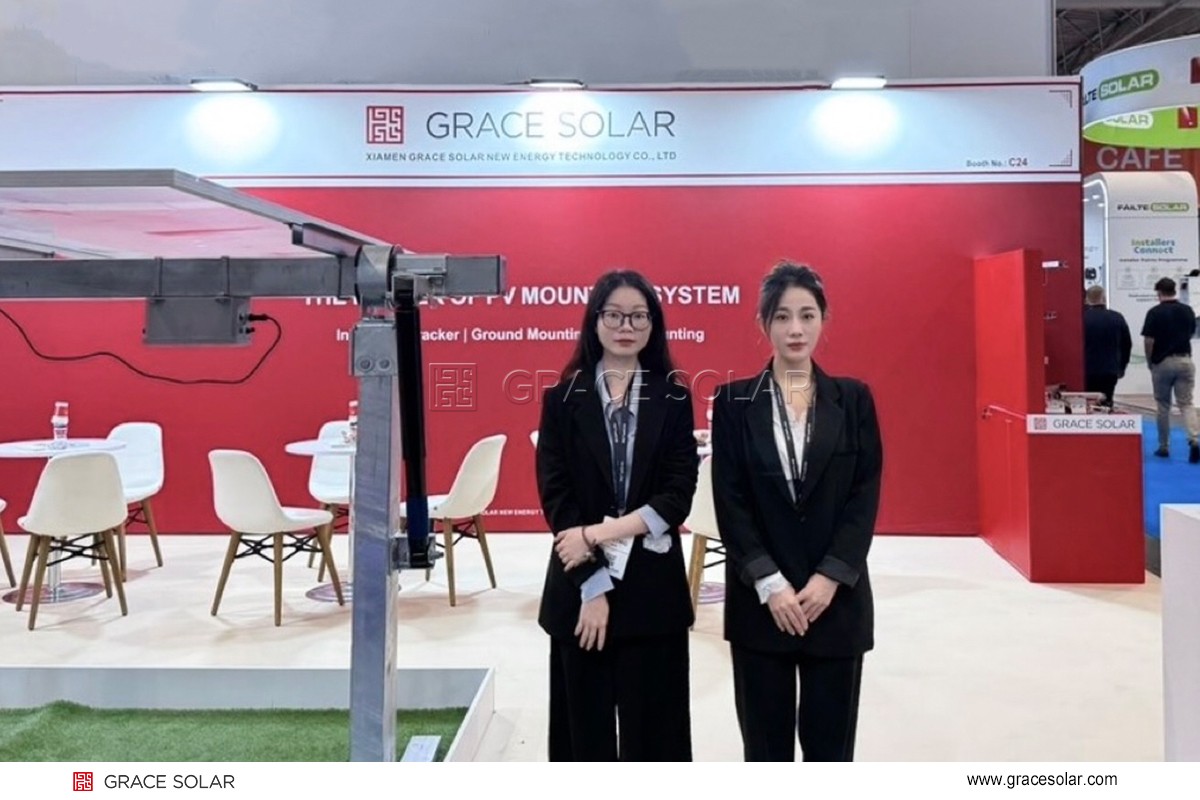
Expo Focus | A Quick Look at Grace Solar at Solar & Storage Live: Full-Scenario Solutions
2026-09-24 -
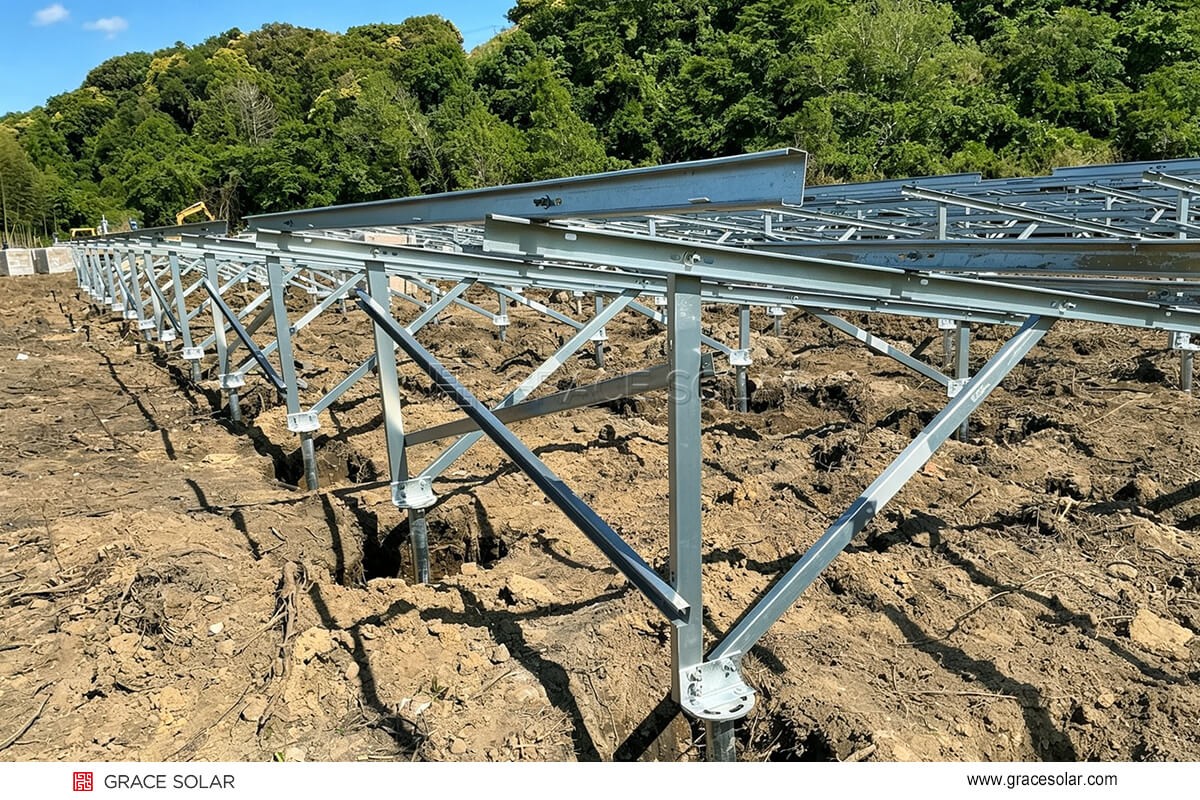
Project Spotlight|Grace Solar Carbon Steel Mounting System Powers Low-Carbon Development in Chiba, Japan
2026-09-15