

Tech Explained | Rock, Soft Soil, Permafrost? How to Choose the Right Solar Foundation “Based on Local Conditions“
 Publish Time:2025-10-21
 Sources:
In the planning and construction of solar power plants, the mounting structure foundation serves as the critical link connecting the solar array to the earth. Its selection directly impacts the overall structural safety, resistance to settlement, and construction costs of the entire plant. Furthermore, soil conditions largely dictate the choice of foundation solutions for solar mounting structures. The soil's bearing capacity determines the load it can support per unit area; for instance, hard rock and dense sandy soil have high bearing capacity, while soft silt and backfill soil have relatively low capacity.
.jpg)
Concrete Foundations:The Stable and Reliable “Gravity Warrior”
Concrete foundations, primarily including isolated footings and strip footings, provide stability by relying on their own weight and contact area with the soil. They utilize the compressive strength of concrete and a large base area to distribute and transfer the structural loads from above into the ground.
Advantages:Mature technology, convenient construction, excellent durability, and wide adaptability to various upper mounting structures.
Disadvantages:Significant earthwork excavation, long construction cycle, certain environmental impact from wet construction processes, and difficulty in restoring the site after removal.
.jpg)
Pile Foundations:The “Sea-Calming Needle“ that Penetrates Weak Layers
Pile foundations transfer loads to deeper, hard rock or soil strata by driving or installing piles deep underground, penetrating through weak soil layers. They primarily rely on side friction and end-bearing resistance for load capacity. Types include pre-cast pipe piles, screw piles, and micro-piles.
Advantages:High load-bearing capacity, fast construction speed, minimal disturbance to the original terrain, making them particularly suitable for complex geology and mountainous projects.
Disadvantages:Require specialized piling equipment, construction can be difficult in strata containing numerous boulders, and relatively high cost.
.jpg)
Ground Screws:The “Surface Anchor“ for Rapid Installation
Ground screws are a foundation type where a hole is drilled using machinery, high-strength cement grout or chemical grout is injected, and a screw anchor is then fixed into the hole. They provide pull-out and shear resistance through the bond and mechanical interlock between the grouting agent and the borehole wall (soil/rock).
Advantages:Extremely fast installation speed, no curing period required, minimal excavation, and environmentally friendly.
Disadvantages:Best suited for hard soil/rock, load-bearing capacity is highly dependent on the density and integrity of the undisturbed soil, requires high construction precision, and quality inspection can be challenging.
While there is no one-size-fits-all solution for diverse soil conditions, Grace Solar leverages extensive practical project experience to ensure different solutions perform effectively in their most suitable environments. We provide tailored mounting system solutions that are safe, efficient, and optimized for lowest lifetime cost, ensuring the security and longevity of green energy infrastructure.
Spotlight News
-
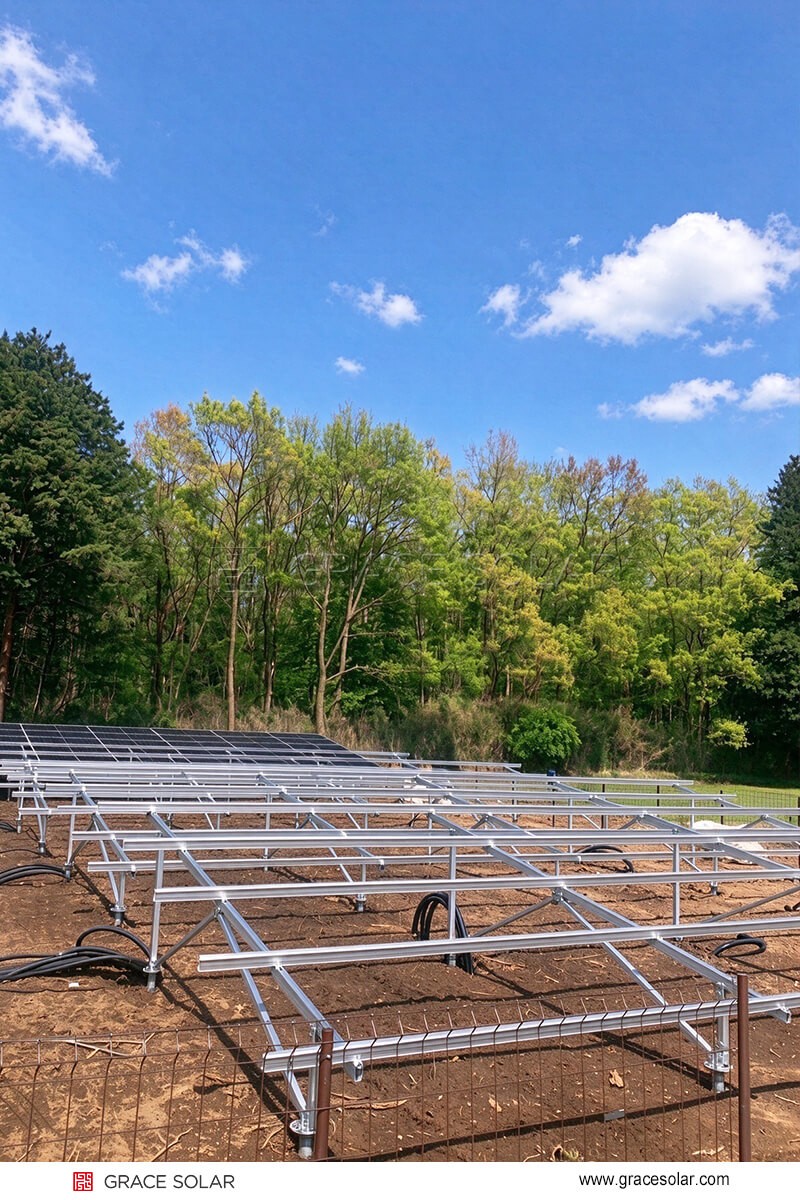
Project Spotlight | Japan PV Practice: Grace Solar Supports Ibaraki's Green Upgrade
2026-10-19 -
Expo Focus | A Quick Look at Grace Solar at Solar & Storage Live: Full-Scenario Solutions
2026-09-24 -
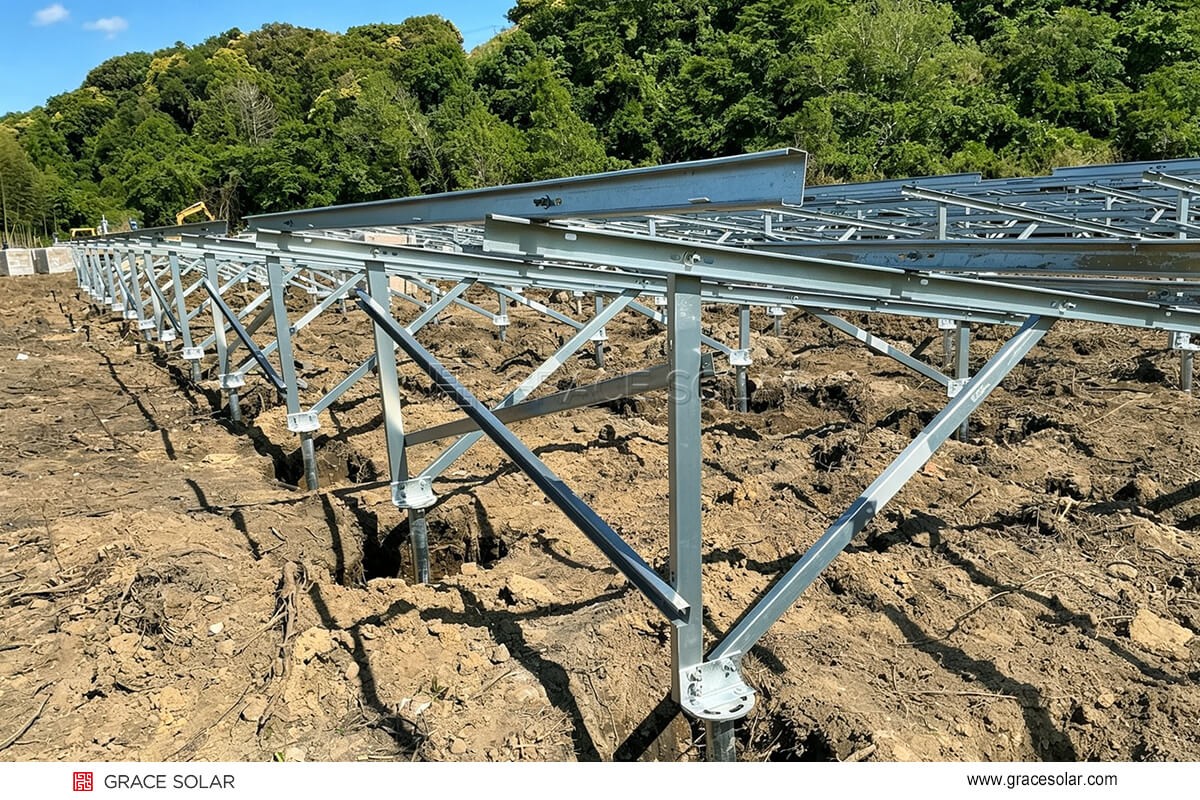
Project Spotlight|Grace Solar Carbon Steel Mounting System Powers Low-Carbon Development in Chiba, Japan
2026-09-15