
New solar tracking mounting, leading more than 'a little bit'
 Publish Time:2021-12-15
 Sources:garcesolar
The mounting industry is located in the middle reaches of the photovoltaic industry chain and mainly includes fixed brackets and tracking mounting.
The entry barrier for fixed brackets is low, the gross profit margin is low, and the product homogeneity is serious. In the context of photovoltaic access to the Internet at a fair price, the era that paid more attention to equipment investment and fixed brackets (ie "cost per watt") in the past will definitely change to pay more attention to return on investment and tracking brackets (ie "cost per kilowatt") Era.
As for the tracking bracket, it is an independent electromechanical control system because it includes a controller, drive and transmission mechanism, steel structure, etc. There are two main types of tracking Mounts: single-axis and dual-axis. The single-axis is divided into flat single-axis and oblique single-axis. At present, flat single-axis is mainly used in the market.
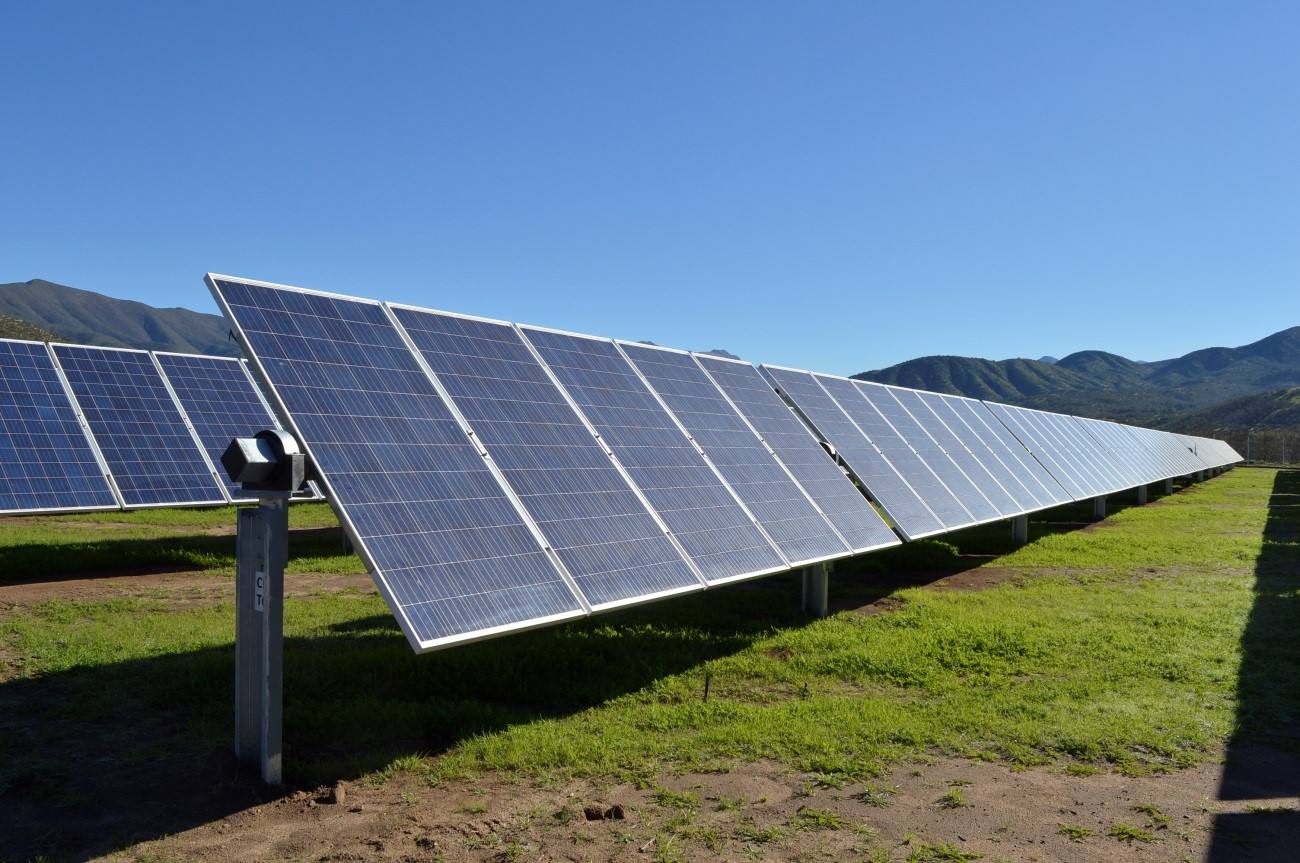
Due to the harsh working environment of the bracket, the reliability of each part of the mechanism is very high. Compared with the fixed bracket, the tracking bracket has a different degree of power generation gain: taking a flat single axis as an example, an increase of about 10% to 20% (different latitudes). For the photovoltaic power station owner or EPC contractor, if the increased cost of the tracking bracket is lower than the power generation income, and the later operation is stable and reliable, it is worth the investment.
Looking at the world, tracking Mounts have been applied in a large number of photovoltaic power stations abroad: in 2019, the global installed capacity of new photovoltaics was 114.9 GW, and the shipment of tracking Mounts was 35 GW, accounting for 30.5%.
Back in China, due to the initial subsidies dominated and the market is immature, the proportion of tracking Mounts is relatively low: before 2016, tracking Mounts accounted for less than 2%; China's photovoltaic grid-connected capacity increased by 30.1 GW in 2019, and the proportion of tracking mounting 16%.
With the arrival of the maturity and affordable era of photovoltaic power generation, it is foreseeable that the proportion of tracking mounting at home and abroad will continue to rise,and there is plenty of room for growth.
Tracking bracket advantage
1. Unique invention:
To remove the light tracker, only a set of intelligent control system is needed to automatically control the photovoltaic bracket and photovoltaic panel to be on the sun track at different times, and to wait for the sun at a certain irradiation angle in advance.
2. Intelligent control:
The intelligent control system has a cumulative working time of about 3-12 minutes per day, and each working time is about 8 seconds, with short working time, no heat, and long service life. The motor adopts a large transmission ratio, and the support rotates slowly, smoothly and firmly.
3. Modularization:
The gantry triangle double-layer support design has simple structure, smooth lines, quick and convenient installation and hoisting; the controller is small and light, moisture-proof, waterproof, and salt-proof.
4. Wide range of applications:
It is widely used in barren hills and slopes, alkali beach water surface, factory roofs, houses, front and rear of greenhouses, roads, bus stations, and fields; it is especially suitable for double-sided power generation components; it can also be used for the installation and use of CSP focusing brackets.
5. Strong adaptability:
Photovoltaic modules are installed at elevated intervals (height can be designed according to needs), vertical (horizontal) direction and single row, so that the modules will never be blocked; the bracket spans more than 6 meters from east to west and about 12 meters from north to south, which meets the needs of domestic and foreign agriculture, The passage requirements of fire-fighting and other machinery have enabled the land to be fully and efficiently used.
6. Strong wind resistance:
Photovoltaic panels are arranged in single rows (horizontal and vertical) at intervals, with sufficient row spacing, air circulation, rapid ventilation, and low wind load per unit area; the grid is rigidly connected between the support and the vertical support, which greatly improves the wind resistance.
7. Strong earthquake resistance:
The support rotation system adopts a double-layer pin connection structure without bearings, gears, gantry, and triangular supports, which counteracts the upload of seismic waves.
8. Flexibility:
Intelligent and manual rotation modes ensure continuous operation of the carriage drive assembly for 25 years.
Features of Tracking Mounts
The photovoltaic tracking Mounts is composed of a controller (generally integrated internal control algorithm at the same time), a motor and a transmission mechanism, and a steel structure bracket. Among them, the tracking algorithm completes the conversion of geographic coordinates and climate information to control the angle; the controller achieves the conversion of the angle signal to the motor control current, and at the same time completes the functions of wireless communication, lithium battery charging and sensor signal reception. The motor drive mechanism is the executive part that tracks the movement. The steel structure supports wind and earthquake resistance, and also supports photovoltaic modules.
In terms of structure, the photovoltaic tracking mounting gradually adopts a multi-point parallel drive mechanism to increase the natural frequency and wind resistance of the system, thereby reducing the angle of wind protection and reducing steel consumption. In terms of controllers, tracking mounting manufacturers should invest in algorithms to research and develop global optimal algorithms to generate more power generation. In terms of operation and maintenance, the application of wireless communication is becoming more and more common, which can realize the centralized control and data collection of large-scale photovoltaic tracking mounting, while reducing the laying of on-site cables. In addition, rapid installation on site minimizes the workload of later operation and maintenance, and the structure of the bracket connector is simple and reliable. It is also an important development direction.