
bipv building integrated photovoltaics, subverting past cognition
 Publish Time:2021-12-14
 Sources:garcesolar
With the intensification of climate problems and the increasing recognition of clean energy transition by the whole society, the distributed photovoltaic market, especially BIPV products, will have huge room for development.
Replacing traditional energy with clean energy and promoting the transformation of the energy structure as soon as possible is the most effective way to control carbon emissions. Among the current types of clean energy, the rapid progress of photovoltaic technology in the past decade has led to a rapid decline in the cost of photovoltaic power generation, making it the most economical and promising clean energy source. According to the analysis of many well-known research institutions, in the middle of this century, human society will achieve a completely clean energy supply, of which photovoltaic power generation will account for more than 60%.
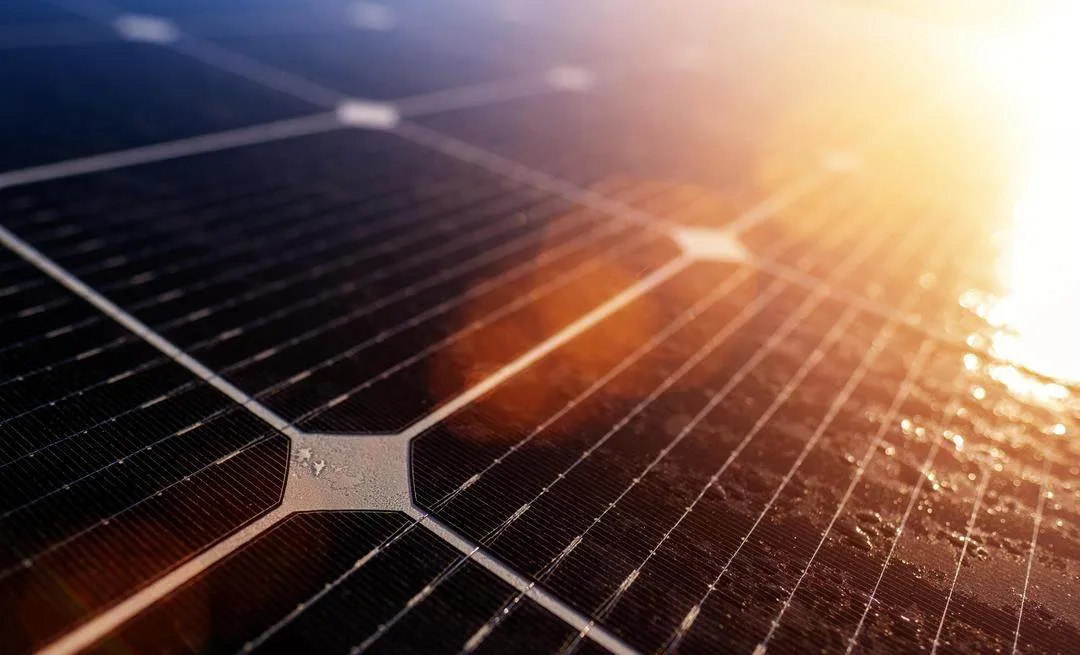
Among the two main application modes of photovoltaic power generation, distributed photovoltaic power generation has developed rapidly in recent years, especially for countries such as my country, which have a vast territory, different levels of economic development, and uneven distribution of resources, which is of practical significance. The western region of my country is rich in hydropower and coal resources, but the development of industry and commerce is lagging behind, and the demand for electricity is low. Whether it is to build a power plant on site for high-voltage output power generation or directly output resources, it will bring huge power loss or transportation costs. However, in the central and eastern regions where industry, commerce, and social economy are more developed, the shortage of power resources caused by resource shortages directly leads to high electricity prices. Due to the existence of day and night peaks and valleys, the electricity price during the daytime peak hours is more expensive. For industrial and commercial users who use more electricity, high electricity prices further increase operating costs.
Distributed photovoltaics are close to the power load center and directly connected to the distribution network system, so that the power generated by distributed photovoltaics does not need to be transmitted through the multi-level grid for long-distance and cross-regional transmission, but can be consumed locally at the power load center, which can reduce photovoltaics The loss of power generation during transmission is an efficient form of photovoltaic power generation utilization.
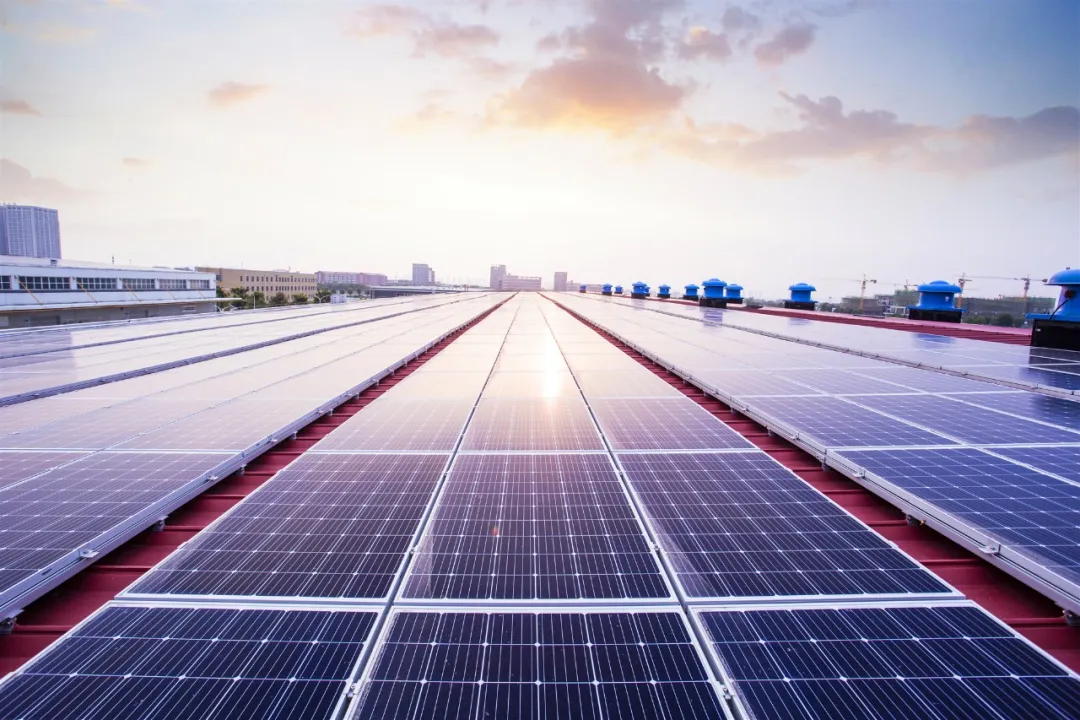
This can effectively save electricity bills for industrial and commercial owners with large vacant industrial and commercial roofs. The "spontaneous utilization of surplus electricity" mode of industrial and commercial distributed power stations not only meets its own electricity consumption, but also makes photovoltaic roofs have greater economic value and greatly shortens the cost recovery period.
In addition, the use of clean photovoltaic power generation can effectively reduce corporate carbon emissions, which can not only meet increasingly stringent emission reduction targets, but also greatly help increasingly international Chinese companies to apply for overseas market access qualifications and related certifications. It is precisely because of these factors that distributed photovoltaic power generation has developed rapidly in my country in recent years, and the construction of distributed photovoltaic power plants with vacant industrial and commercial roofs has become the unanimous choice of more and more industrial and commercial owners. The traditional industrial and commercial distributed photovoltaic power station construction is mainly to install photovoltaic module products on the roof of the building. In recent years, with the strong support of green buildings and the continuous progress of global photovoltaic technology, integrated building photovoltaic (BIPV) products that combine distributed photovoltaic power generation with building materials have begun to appear.
Compared with traditional rooftop photovoltaic systems, BIPV products can not only meet the functional requirements of photovoltaic power generation, but also take into account the functional requirements of buildings. BiPV products are a combination of photovoltaic products and building materials, which can replace some traditional building materials. They can be designed as a whole in the architectural design stage and integrated with the main building during the construction process. These new features have also brought BIPV more and more attention from the market. Various BIPV products have sprung up and become the "new generation" of the photovoltaic product family.
Therefore, when the BIPV era comes, I believe that the market and users are looking forward to an excellent BIPV product with technical advantages, quality advantages, design advantages, and brand advantages. It is exciting to see that some large-scale crystalline silicon photovoltaic companies with leading technology are entering the BIPV industry, and more excellent BIPV products will meet with us in the near future. This will not only set a new benchmark for the fiercely competitive BIPV market, but also further promote the healthy development of the BIPV industry with high-efficiency and high-quality products, which will be welcomed by the market and users.